Terrain-referenced navigation
on embedded hardware.
Built to operate when external infrastructure fails. Designed from the start to run on hardware that makes mass production viable.
Why infrastructure-independent navigation
matters now.
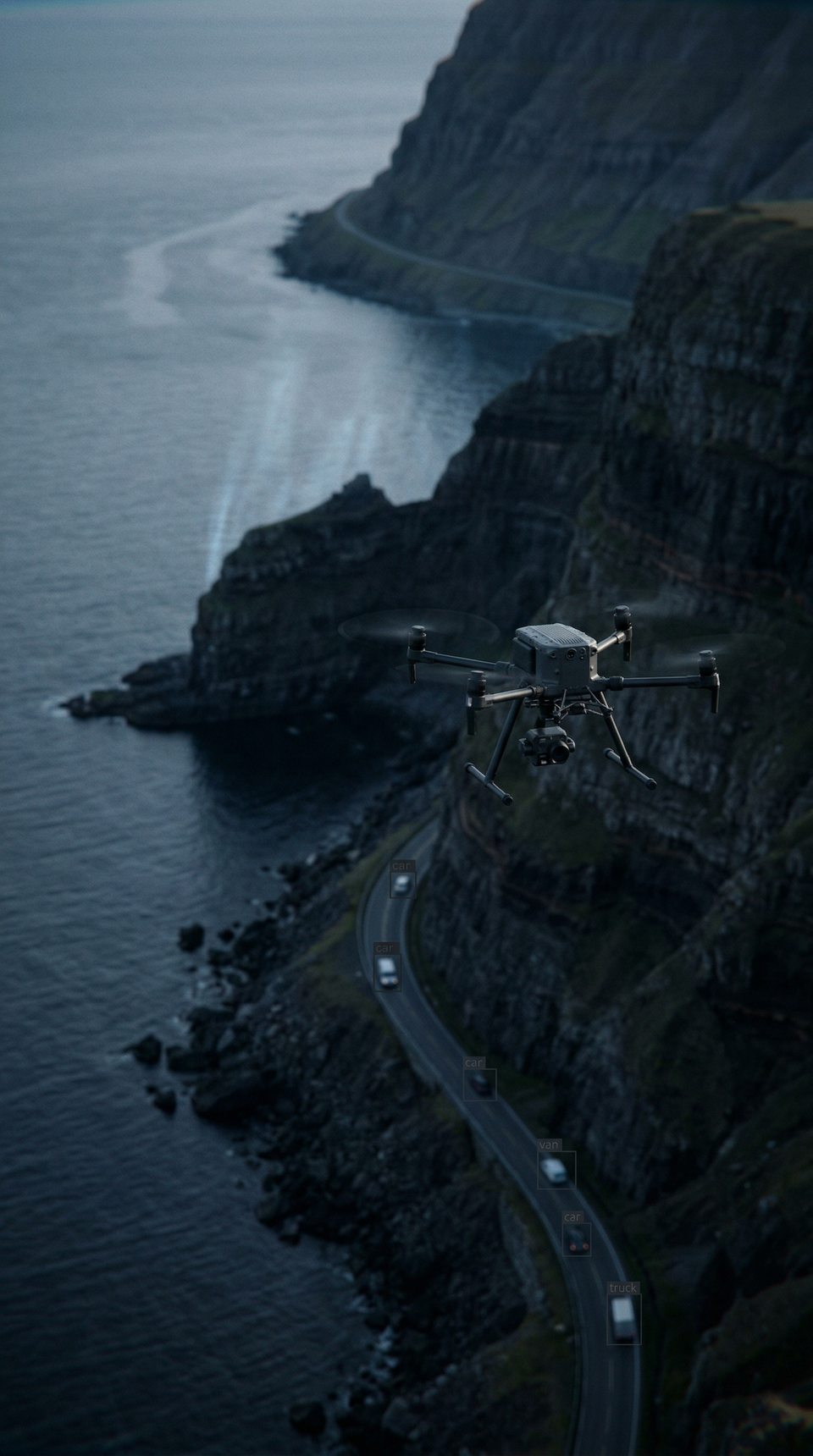
GNSS jamming and spoofing have become standard electronic warfare capabilities deployed across active theatres. The battlefields of Ukraine demonstrated that GPS denial is not a future threat; it is the present operating environment. Autonomous platforms that rely on satellite navigation lose positional integrity the moment those signals are degraded or denied.
The same structural vulnerability extends to critical infrastructure beyond the battlefield. Offshore energy platforms, Arctic logistics operations, and port automation systems operate in environments where GNSS is routinely degraded by interference, geometry, or deliberate disruption — and where positional failure carries consequences measured in safety and continuity, not only mission outcome.
Existing alternatives carry significant trade-offs. High-grade inertial navigation systems based on fiber-optic gyroscopes deliver exceptional accuracy but at price points incompatible with mass-producible platforms. Pure visual odometry provides relative motion but accumulates drift without absolute anchoring.
The gap is specific: low-cost, low-power multimodal navigation capable of delivering bounded absolute position on microcontroller hardware rather than requiring GPU-level compute. This is the gap Clausal addresses.
Multimodal terrain-referenced navigation
with inertial fusion.
Position without a signal.
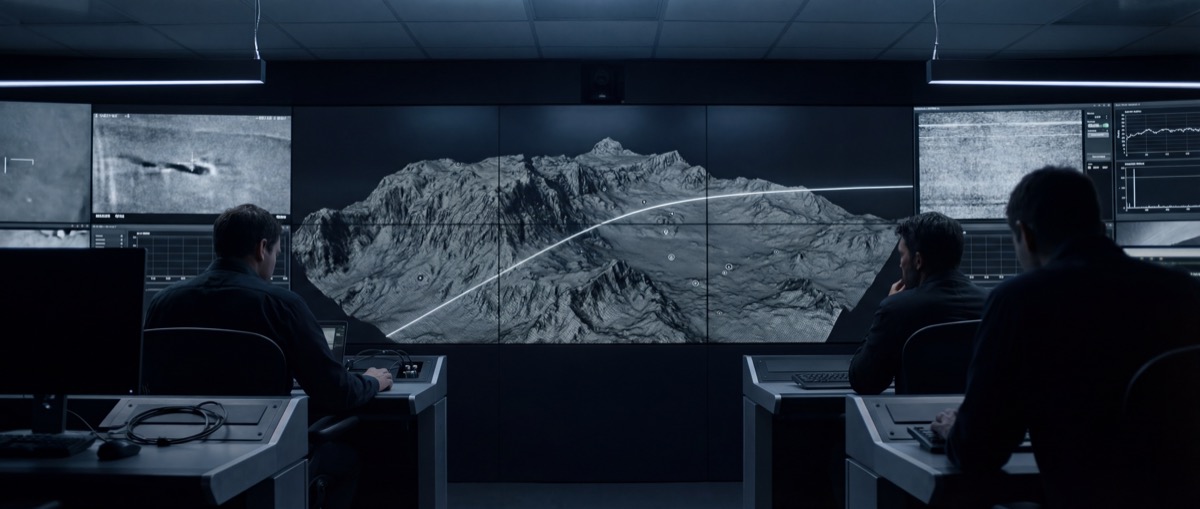
Visual and complementary sensor inputs capture real-time observations of the surrounding terrain. These observations are matched against preprocessed environmental models to determine absolute position, orientation, and heading. The system produces a geographic position fix without reliance on GNSS or continuous connectivity.
The chip that changes the economics.
Clausal’s models are designed from inception to run on microcontroller hardware. This is a deliberate architectural decision: systems that operate on low-power, low-cost embedded processors can be mass-produced and integrated at price points that make fleet-scale deployment viable. For programs where unit economics matter — and at volume, they always do — the difference in bill-of-materials cost between embedded inference and GPU-class compute determines what can be produced at scale and what remains a high-cost integration project.
Continuous between fixes.
Inertial measurement units provide continuous navigation between position fixes, covering transitions across feature-sparse terrain or during maneuvers that temporarily degrade sensor visibility. Absolute terrain-referenced updates bound inertial drift, creating a fused navigation solution that is continuous and drift-controlled.
Validated where it’s hardest.
Designing and testing in Finland means operating in some of the most demanding environmental conditions in Europe: snow-covered terrain, extreme low sun angles, dense boreal canopy in summer, and prolonged winter darkness. Validating performance across these conditions means the system holds across diverse operational theatres.
European sovereign
AI infrastructure.
All model training and development runs on Clausal’s dedicated compute infrastructure in Finland. Training data remains within European jurisdiction.
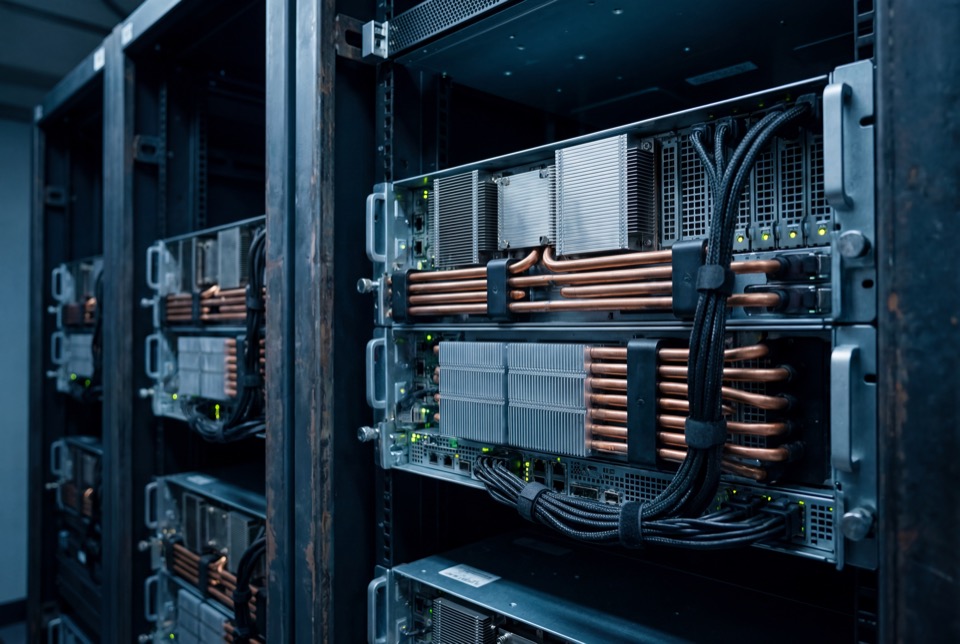
European defense procurement increasingly requires data sovereignty and controlled infrastructure. Clausal’s in-house training environment ensures partner data does not leave European jurisdiction and that model development occurs on dedicated hardware rather than shared commercial infrastructure. This is not a compliance layer; it is a foundational architectural decision.